Creating a new way to look at your health
Overview
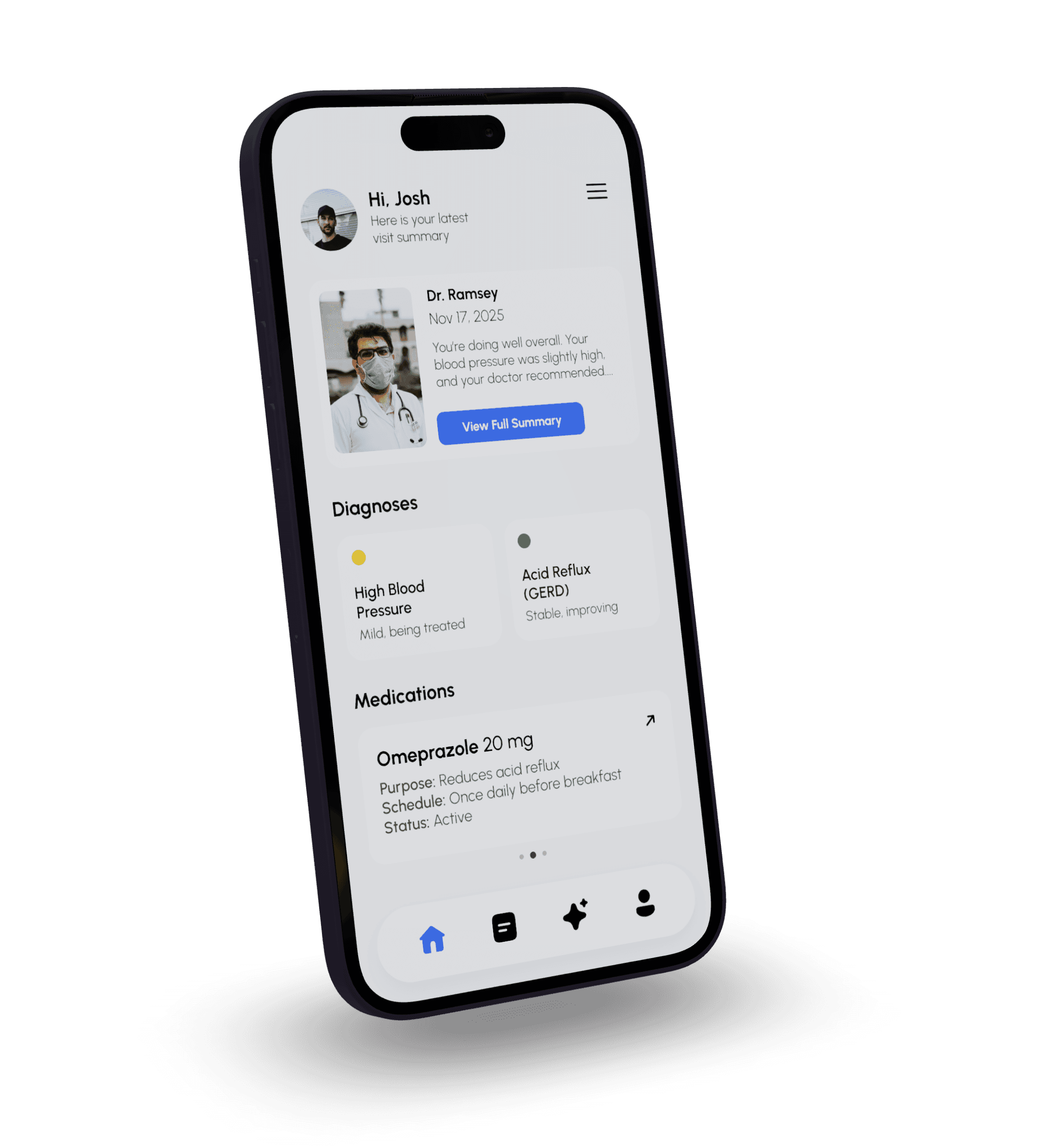
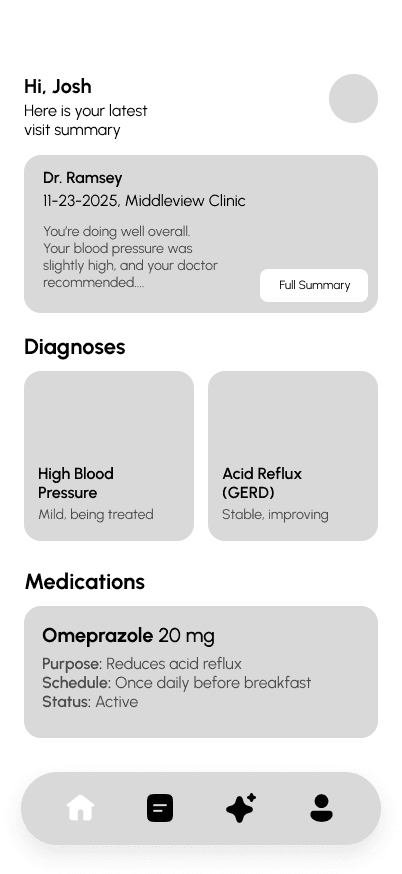
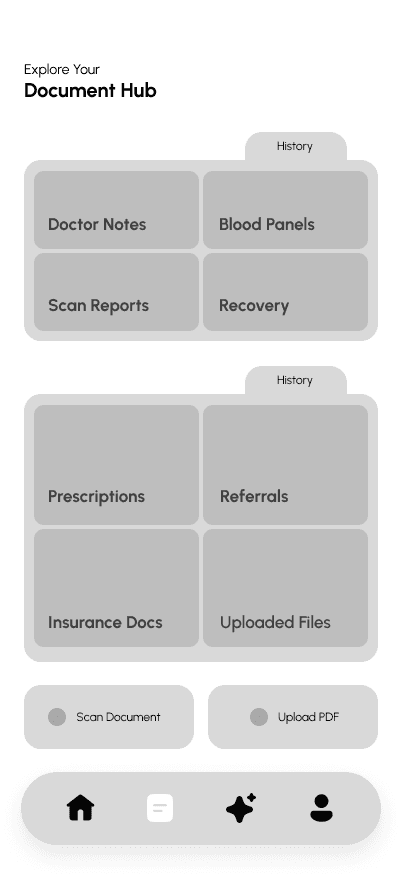
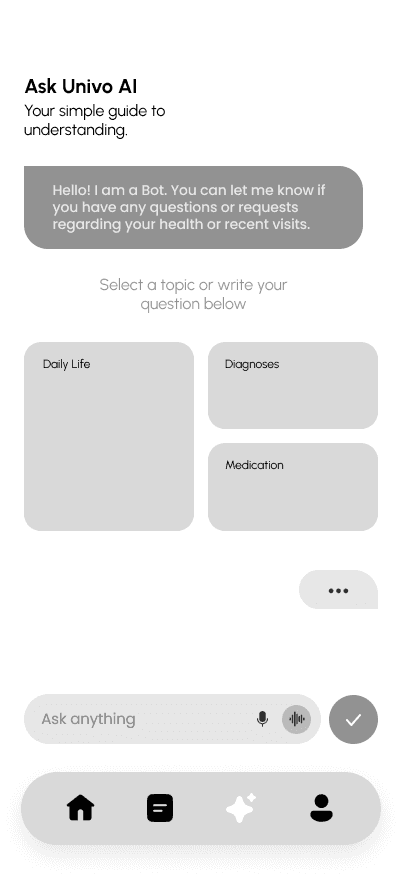
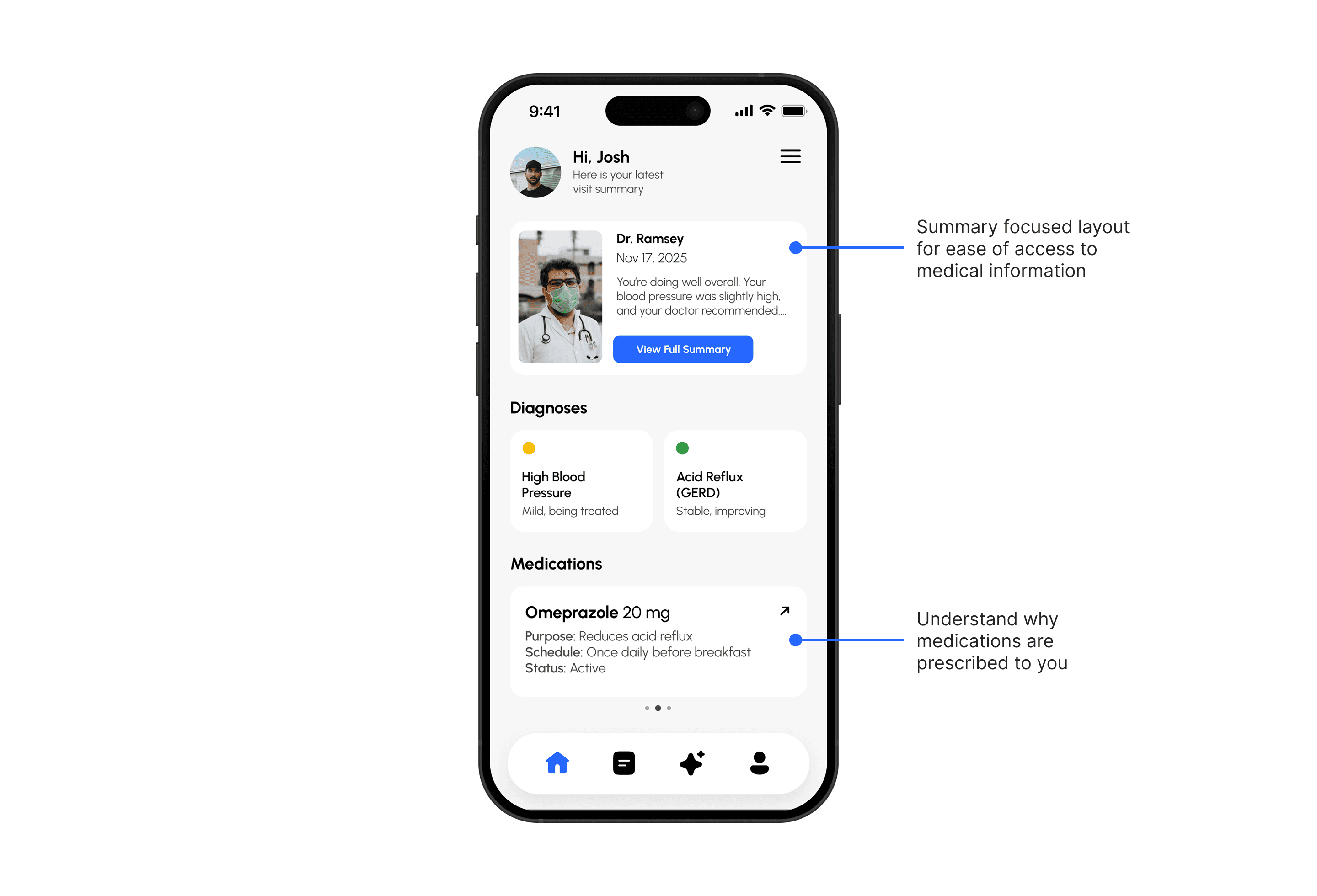
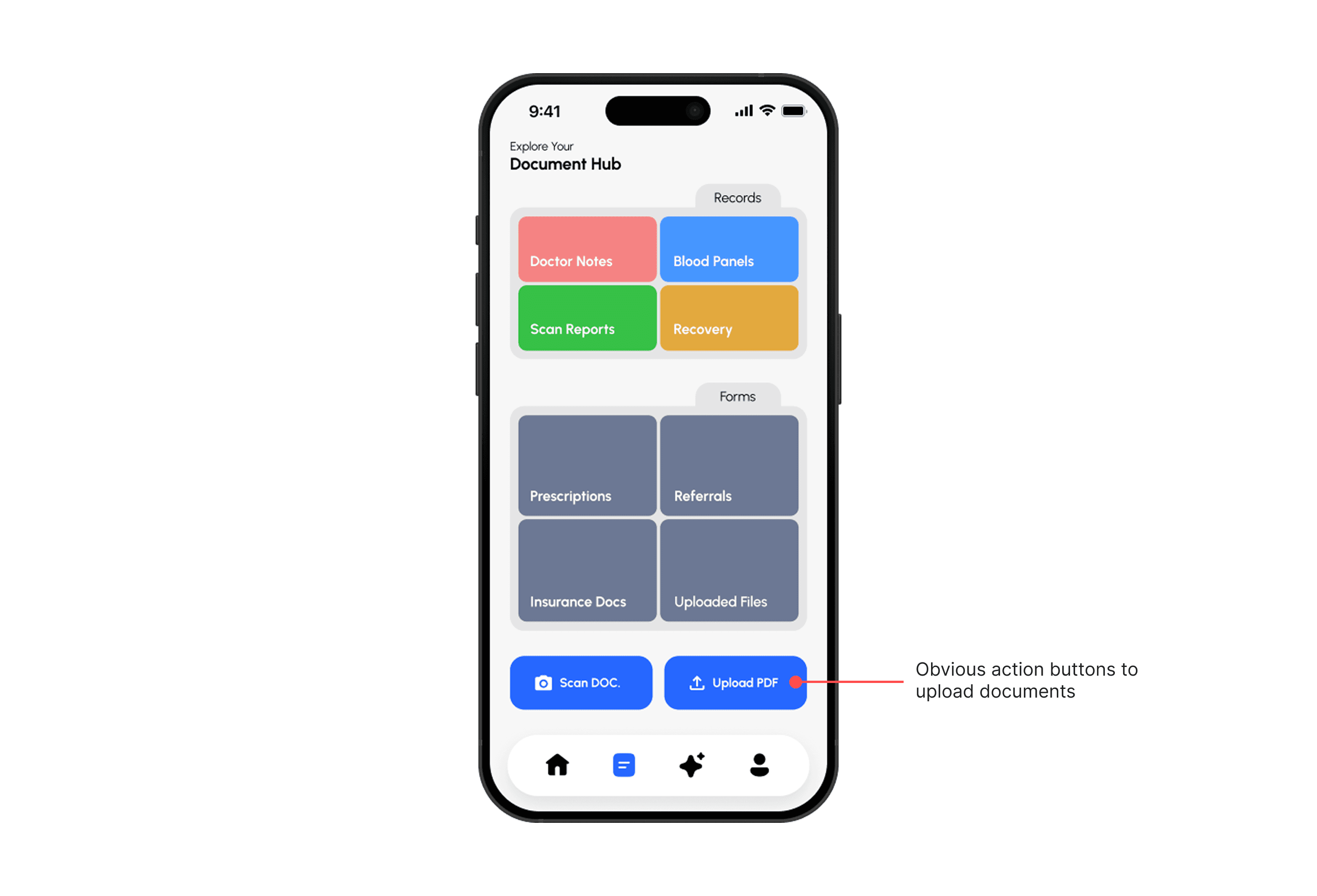
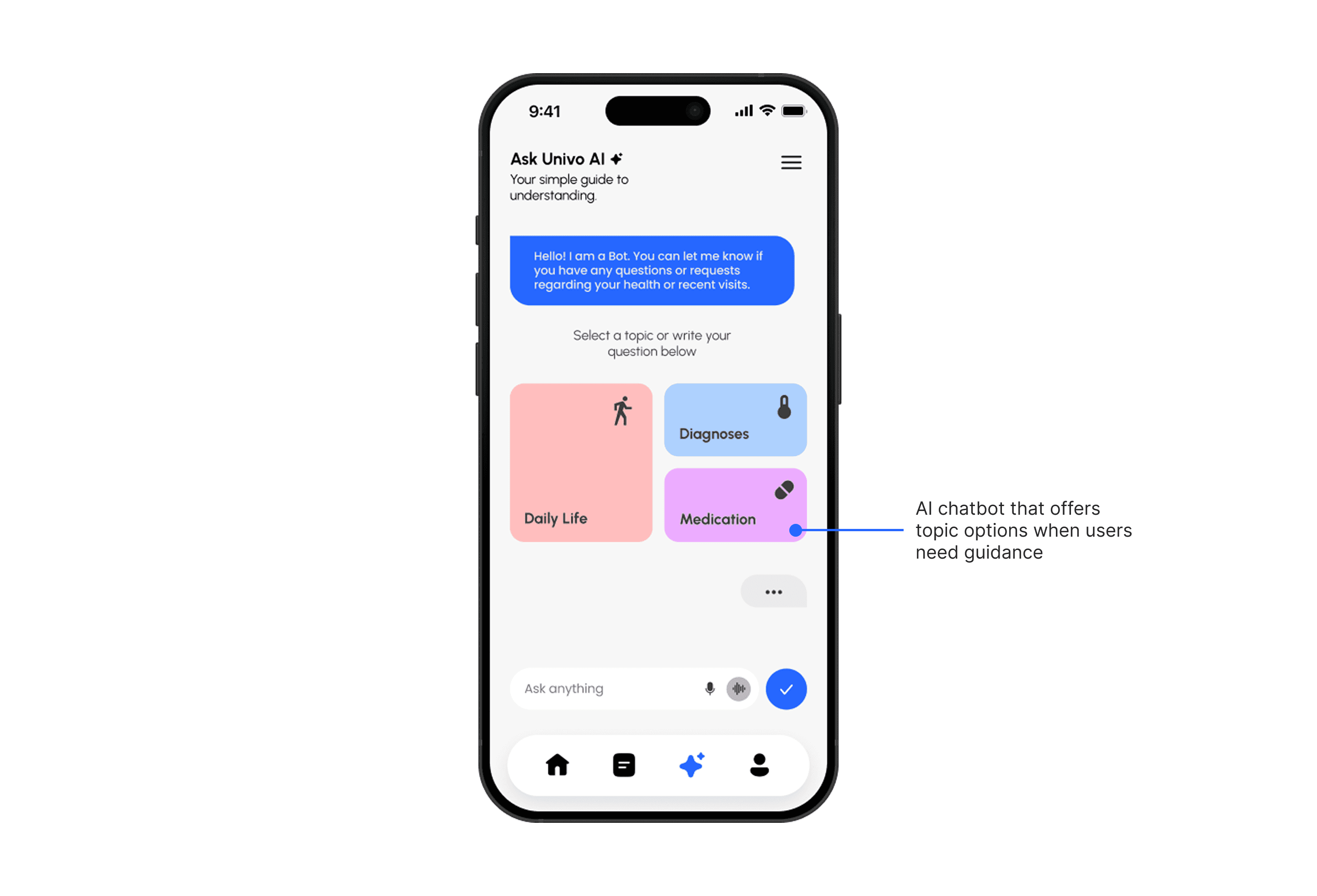
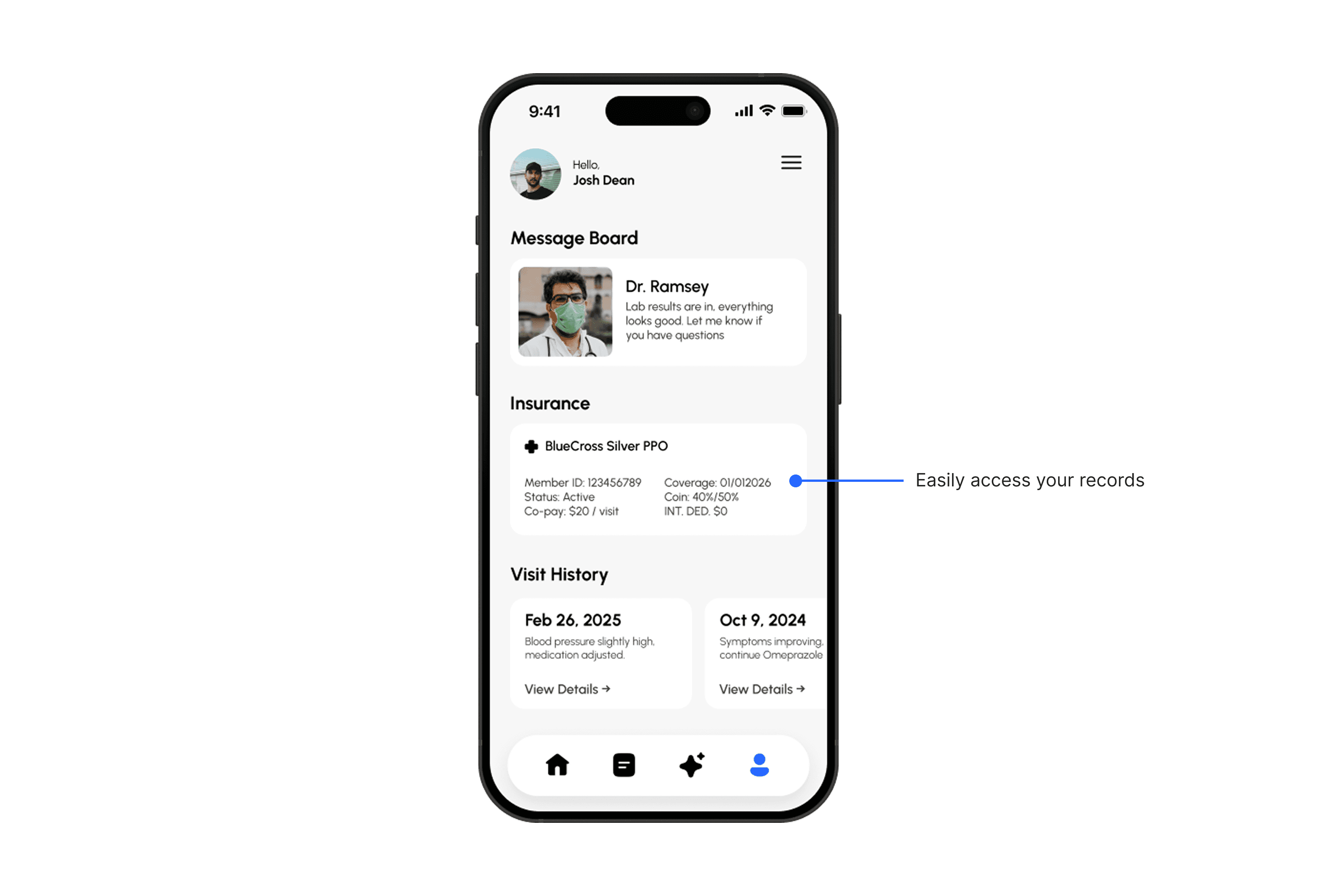
Univo is a new mobile app concept created for a student project. It helps adult patients understand their health by turning complex medical records into clear, simple summaries. It highlights diagnoses, medications, next steps, recent visits, and insurance details, and lets users upload their own records.
Univo is designed for adult patients managing ongoing or unfamiliar health conditions, especially those who:
Receive digital visit summaries through patient portals
Are asked to follow up on medications or lifestyle changes
Feel overwhelmed reviewing medical records on their own
Role: UX/UI Designer
Timeline: 4 weeks
Tools: Figma, FigJam, Illustrator
Project Type: Concept project
User Needs
Patients need a clear summary of what happened during their visit, what has changed, and what actions to take next, without medical knowledge.
Research
To understand how patients engage with their medical records, I reviewed anonymized visit summaries and explored existing patient portals and health apps. Most records were written in clinical language and formatted for providers, not patients, making it difficult to quickly understand diagnoses, medications, or required follow up actions.
Across tools and documents, a consistent pattern emerged. Patients generally had access to their information, but struggled to identify what mattered most after an appointment. Important next steps were often buried in long text blocks, which discouraged engagement and led patients to seek clarification elsewhere. This revealed that the core issue was not access to data, but clarity at the right moment.
The Problem
Medical information is often written for clinicians, not patients. After appointments, patients receive visit summaries and records filled with medical jargon, abbreviations, and dense formatting.
As a result
Process
Using research insights, I focused the design around progressive clarity.
I explored several approaches, including full note rewrites and inline definitions. Early concepts felt overwhelming or disruptive. I ultimately chose a summarized view that preserves the original record while offering a clear, patient friendly layer on top.
Design Goals
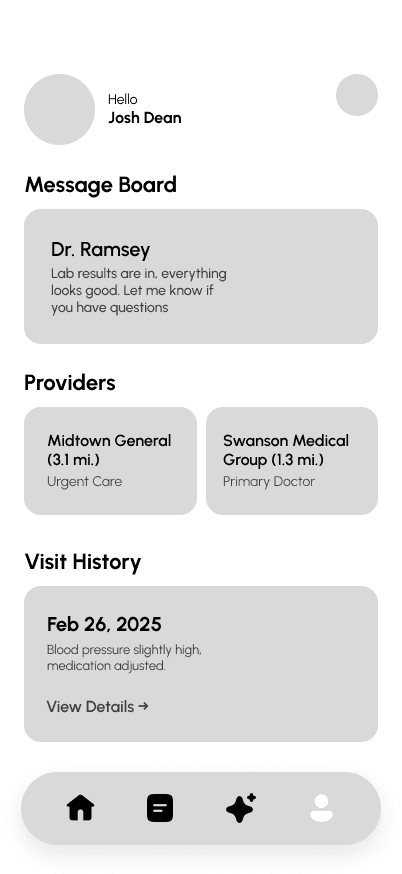
Wireframes
User Feedback
During informal feedback sessions, users expressed that while the summaries were helpful, some sections felt easy to miss at a glance. In response, I adjusted hierarchy, increased contrast for key actions, and clarified labels to improve scannability.
Solution
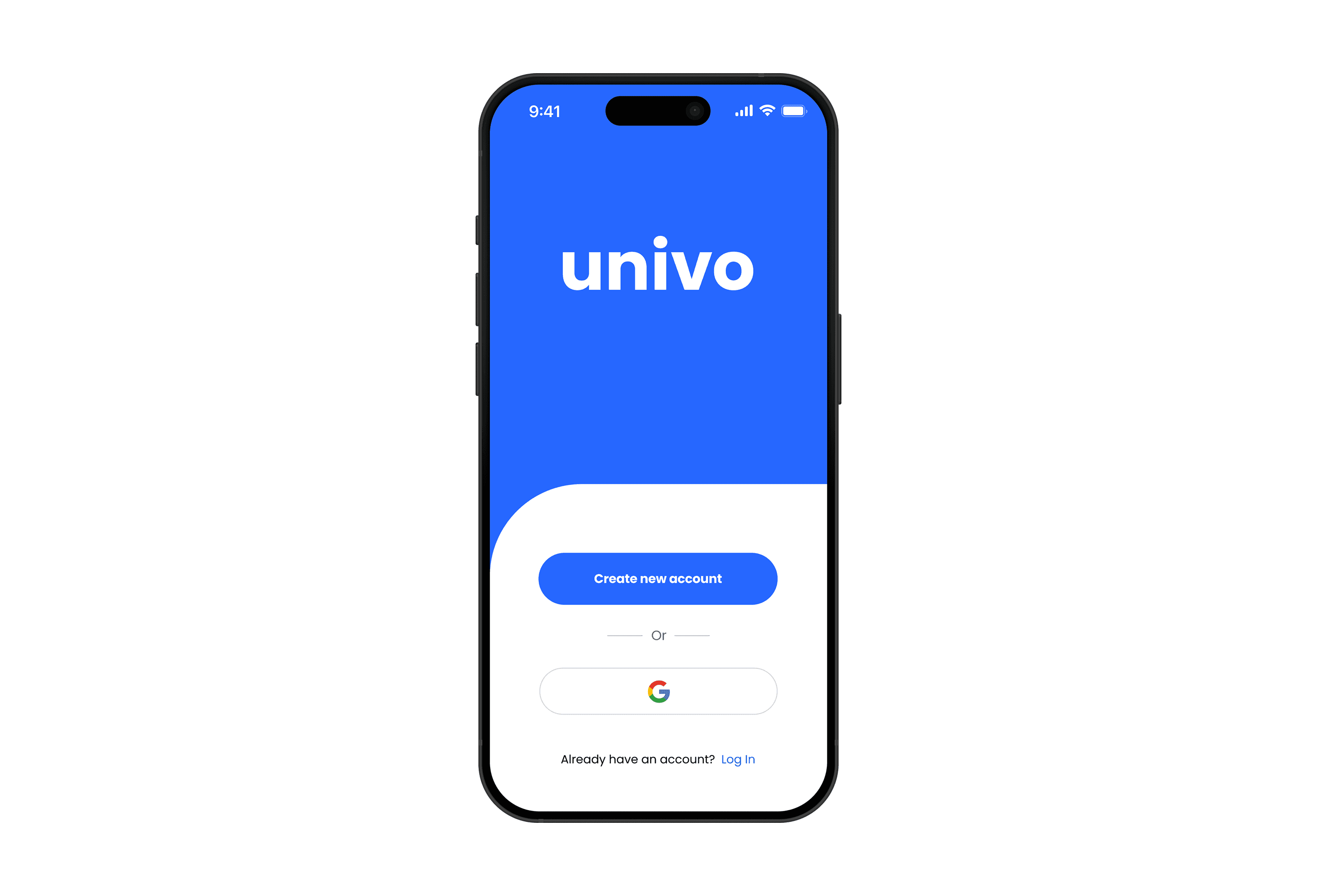
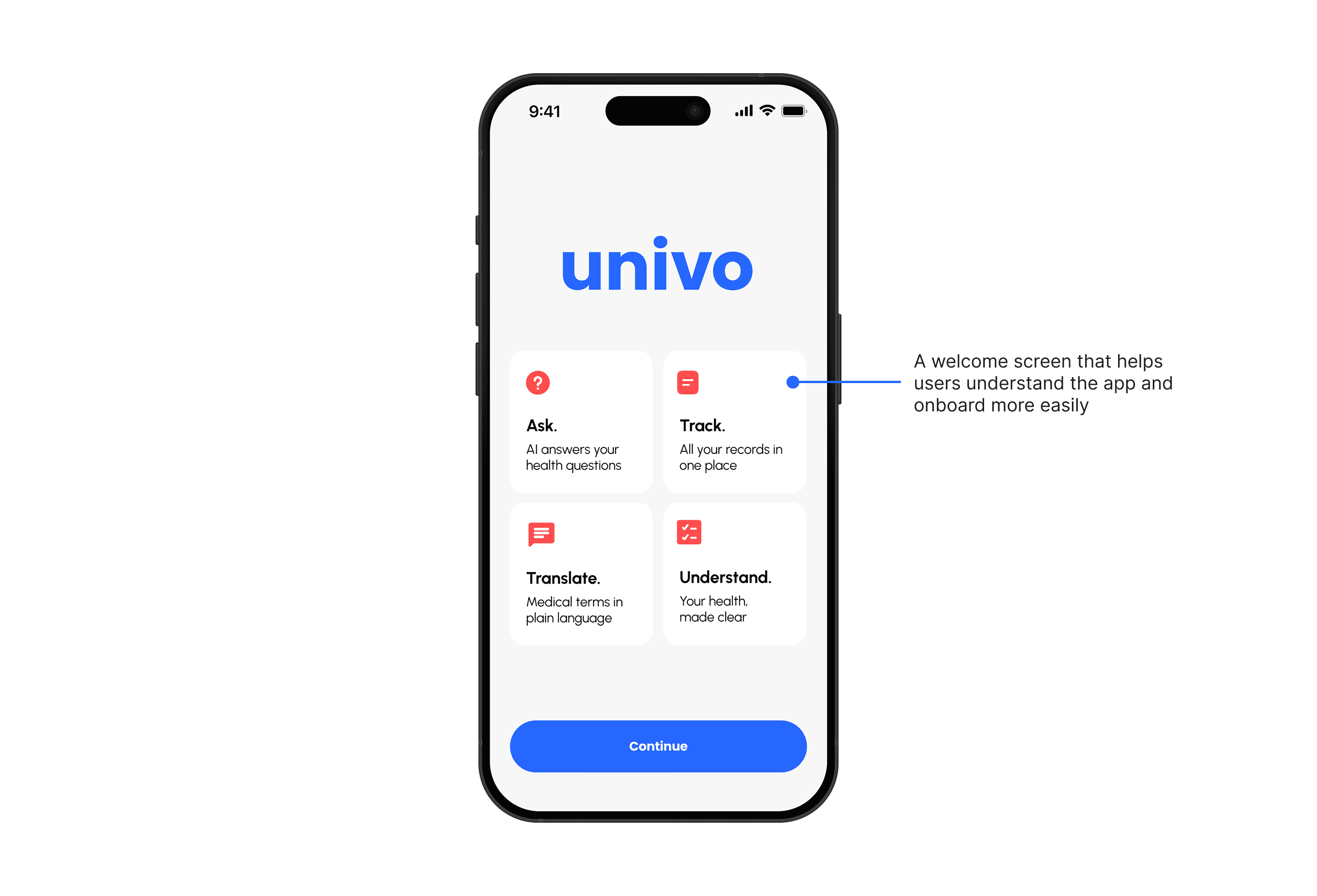
The final prototype reflects a balance between clarity and credibility, helping patients understand their medical information without feeling overwhelmed or confused.
Impact & Reflections
Performance Against Objectives
The final design met the core objective of improving clarity around medical information. By surfacing diagnoses, medications, and next steps in a summary-first layout, Univo helps patients quickly understand their care without needing to read complex medical jargon.
Impact on Users
Univo is designed to reduce confusion and anxiety after medical appointments. The structured summaries and visual hierarchy make it easier for patients to identify what matters most, supporting greater confidence and engagement with their health information.
Lessons Learned
This project reinforced the importance of designing for emotional context. I learned that clarity is not just about simplifying content, but about presenting information in a way that feels calm, trustworthy, and respectful of the user’s situation.
Areas for Future Improvement
If continued, I would conduct usability testing with a broader range of patients, refine accessibility for different health literacy levels, and explore deeper integrations with patient portals to keep up to date.
Thank You!
This project strengthened my ability to translate complex, sensitive information into experiences that prioritize empathy, clarity, and usability.